Analysis of the Causes and Psychosocial Trauma Associated with Banditry and Cattle Rustling in Maru LGA, Zamfara State, Nigeria
Keywords:
Banditry, Cattle rustling, Psychosocial, Trauma, Maru LGA, Zamfara StateAbstract
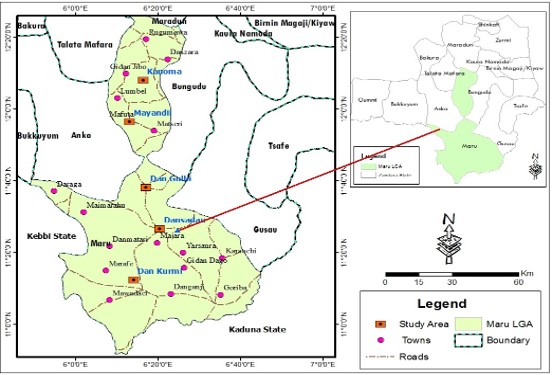
This study examined the major causes and traumatic effects of banditry and cattle rustling among residents of Maru Local Government Area of Zamfara State, Nigeria with the aim of providing empirical evidence on the nature of these crimes and their psychological impact on residents. A mixed-methods approach was adopted, combining quantitative and qualitative data collection techniques. The study covered five wards: Kanoma, Mayanchi, Dan Gulbi, Dan Sadau, and Dan Kurmi. Data were collected through structured questionnaires administered to 393 respondents and Key Informant Interviews with traditional leaders and security personnel, supplemented by direct observation. Findings revealed that lack of effective security and corruption (98%), availability of small and light weapons (97.5%), unemployment among youths (93.1%), farmers/herders clashes (89.8%), and displacement caused by civil wars in neighbouring countries (87.3%) were major causes of banditry and cattle rustling. Natural disasters such as drought and climate change were also identified by 74.8% of respondents as contributing factors. The study further revealed severe traumatic effects on residents. Rape-related stigmatization recorded the highest mean score (4.62), followed by psychological trauma caused by banditry (4.53), vulnerability of women and children (4.47), and high blood pressure among residents (4.41). The study concludes that insecurity in the area is largely driven by socio-economic hardship, weak security systems, and environmental pressures. It recommends improved security measures, youth empowerment programs, control of illegal arms, provision of basic amenities, and stronger collaboration between government, security agencies, and local communities to address the menace effectively.
Published
How to Cite
Issue
Section
Copyright (c) 2026 Sharma Diwa Midala, Bulus Ajiya Sawa, Daniel Audu Bata, Rahila Diwa Midala (Author)

This work is licensed under a Creative Commons Attribution-NonCommercial 4.0 International License.
- Attribution — You must give appropriate credit, provide a link to the license, and indicate if changes were made. You may do so in any reasonable manner, but not in any way that suggests the licensor endorses you or your use.
- Non-Commercial — You may not use the material for commercial purposes.
- No additional restrictions — You may not apply legal terms or technological measures that legally restrict others from doing anything the license permits.