Ethnicity as an Asset: Reassessing Its Role in Nation-Building in African Governments

Authors

Keywords:

Ethnicity, Nation, State, Nation-building, Sustainable development.

Abstract

This study reevaluates ethnicity’s role in African nation-building, challenging its dominant framing as a liability and reconceptualizing it as a potential asset for state cohesion. Drawing on post-independence experiences across the continent, the paper interrogates how colonially imposed borders, divide-and-rule policies, and elite instrumentalization transformed ethnic identity into a source of conflict, as seen in Rwanda, Nigeria, and Sudan. Yet comparative analysis of Tanzania, Ghana, Botswana, and Ethiopia reveals that ethnicity does not inherently destabilize states. Instead, outcomes depend on institutional design, inclusive governance, and state capacity. Where public goods are delivered impartially and federal or consociational arrangements accommodate diversity, ethnic and national identities coexist without contradiction. The research contrasts Ethiopia’s ethnic federalism with Rwanda’s post-genocide civic identity model to show that both forced assimilation and politicized ethnicity entail risks. It further examines how education, secularism, and regional integration can reframe ethnic affiliation as a resource for national unity. The historical methods of description and analysis was deployed in this study. The study relied on secondary data drawn from arrays of scholarly publications. Case studies of secessionist movements, resource conflicts, and Mobutu’s cultural nation-building in Zaire illustrate that state-building without inclusive nation-building produces fragile states. Concluding that nation-building in Africa is not about eradicating ethnicity but managing pluralism, the paper argues for nested identity structures, equitable resource distribution, and indigenous governance frameworks. When harnessed through democratic practice and good governance, ethnicity can strengthen social cohesion, historical reconciliation, and sustainable development, converting a perceived obstacle into a tool for genuine national integration.
Dimensions

Adebayo, P. (2014). The Impact of Leadership and Governance on Nation-Building in 21st Century Africa. Carthage Center for Research and Information, Pp.1-17.

Ake, C. (1990). History as the Future of Social Science. Tarikh: History and the Social Sciences. Vol.9, Pp.19-20.

Akim, F.R. & Akim, W.D. (2019). Conflict Resolution in South Sudan. Journal ICMES vol.3, No1. Pp.53-74.

Akuche, A.B.M. (2016). Nation-Building and the Impediments of Building the Nigerian Nation. Pp.1-24. Retrieved from Researchgate.edu on 12/05/2026.

Alumona, I.M. & Azom, S.N. (2018). Politics of Identity and the Crisis of Nation-Building in Africa. In S.O. Oloruntoba & T. Falola (eds.). The Palgrave Handbook of African Politics, Governance and Development. New York: Palgrave Macmillan, Pp.291-306.

Ani, K.J., Ihuoma, C., Nwachukwu, V., & Ekpo, M.E. (2023). Insecurity and Secessionist Threats in Nigeria. African Renaissance, Vol.20, No.1, Pp.93-109.

Anshan, L. (2026). Decolonization, National Consciousness, and Nation-Building in Africa Since World War II. International Journal of Anthropology and Ethnology, Vol. 10, Issue 6, Pp.1-29.

Apat, K.T., Dakusuk, M.J., & Unegbu, C.P. (2025). Participatory Democracy, Good Governance and Economic Development in Nigeria: Challenges and Prospects. FUDMA International Journal of Social Sciebces Vol 5, No.4, Pp64-75.

Asiegbu, M.F. (2015). African States and Nation-Building in the Context of Modernity, Decolonization and Globalization. West Africa Journal of Philosophical Studies, Vol. 17, Pp. 1-12.

Bandyopadhay, S. & Green, E. (2013). Nation-Building and Conflict in Modern Africa. World Development, Vol. 45, Pp. 108-118.

Bayram, M., Altum, M.T., & Ugurlu, M. (2018). Language and Nation-Building in Sub-Saharan Africa. Turkey: International Conference on Social Sciences, (ICOSS) eBook. Culture Impact Journal. Pp. 237-250.

Bereketeab, R. (2020). Education as an Instrument of Nation-Building in Post-Colonial Africa. Studies in Ethnicity and Nationalism, Vol.20, No.1, Pp.71-90.

Berriso, T. & Sorsa, L.D. (2025). Reassessing National Unity in Ethiopia: Strategies for Nation-Building Amidst Diversity and Challenges. The Journal of Oromo Studies, Vol.29, Issue 2, Pp.24-59.

Bratton, M. (2004). State Building and Democratization in Sub-Saharan Africa: Forwards, Backwards, or Together? In M. Bratton, E. Gyimah-Boadi, & R. Mattes (Eds.) Afrobarometer Working Papers. USA: Mitchigan University Press, Pp. 1-27.

Building Amidst Diversity and Challenges. Journal of Oromo Studies, Vol. 29, No.2, Pp.24-59.

Carr, E.H. (1961). What is History?. Great Britain: Penguin Books Ltd. P.19.

Christensen, D. & Laitin, D.D. (2019). African States Since Independence: Order, Democracy and Development. London: Yale University Press. Pp.1-20.

Colenso, G. & Saunders, C. (2002). New Light on the Pan- African Association: Part1. African Research and Documentation Vol. 107, Pp. 27-45.

Collingwood, R.G. (1946). The Idea of History. London: Oxford University Press. P.9.

Debelo, A.B., & Keno, G.I. (2025). A ‘Python Model’ of Nation-Building in Ethiopia until 1991: its Legacy and Ongoing Challenges to Ethnocultural Diversity, Peace , and Development. African Identities, Pp. 1-16.

‎Deutsch, K. W. (1953). Nationalism and Social Communication: An Inquiry into the Foundations of Nationality. United States : MIT Press.

Ejovi, E.A., Ataine, E.S., & Akpokihe, O.R. (2016). Ethnicity and Nation Building in Africa. Journal of Political Science and Leadership Research, vol.2, No.2, Pp.1-9.

Fanon, F. (1963). The Wretched of the Earth. New York: Grove Atlantic Press.

Filibus, Y. & Onyebuchi, J.S. (2025). Issues and Challenges of Nation-Building Process in Africa: An Overview. Wukari Historical Review, Vol.4, No.1, Pp.73-96.

Giorgis, A.W. (2010). Nation Building, State Construction: the Case of Eritrea. Germany: Friedrich Ebert Stiftung. Pp. 1-24.

Gwala, R.S. & Mashau, P. (2022). Covid-19 Migration and Nation-Building in Africa: A Systematic Literature Review. Journal of Nation-Building and Policy Studies, Pp.223-255.

Igbokwe-Ibeto, C.J. (2024). Examining the Interface Between Bureaucratic Leadership and Nation-Building in Africa. UNISA Commonwealth Youth and Development, Vol.21, No.1, Pp.1-17.

Laitin, D.D. & Christensen, D. (2019). African States Since Independence: Order, Development and Democracy. London: Yale University Press

Larry, Steve (2024). The Ethnic Minority Question and Nation Building in Nigeria 1960-2020. Labar Journal of Military History & Peace Studies

Mashimbye, Rich (2024). Wither Ethiopia? Ethnicity and Nation (Un) Building; An Analysis Focussing on the Period 1991-2022. Journal of Nation-Building & Policy Studies. Vol. 8, Issue 2, Pp.65-72.

Meredith, M (2005). The Fate of Africa: A History of Fifty Years of Independence. New York: Public Affairs.

Musarurwa, H.J. (2016). African Nation-Building: Lessons for Youths in Modern Day. Tanzania: Mandela Institute for Development Studies. Pp.1-29.

Oguh, S.V. (2015). Examine the Relevance of Nation-Building in Contemporary Africa? Retrieved from Academia.edu. on 12/05/2026.

Okeke, R.C., Ikeh, C.P., & Oku, C.C. (2022). The Concept of Nation-Building: Theoretical Expositions. Journal of Humanities and Social Policy, Vol.8, No.1, Pp.17-26.

‎Okeleke, J.C. (2025). Exploring and Evaluating the Intricacies in Press Coverage During EndSARS Protest in Nigeria. Global Journal of Arts and Social and Management Sciences, Vol.3, No.1. Pp.67-81.

Omotosho, O.F. (2016). Ethnicity as a Tool for Nation-Building in Nigeria. International Knowledge Press, Vol.19, No.3, Pp.175-193.

Orji, K.E. (2012). Historical Research and Nation-Building in Africa. LWATI A Journal of Contemporary Research, Vol.9, No.3, Pp.80-89.

Oyewole, T.G., Adegoke, J.A. (2018). Human Capital Development in Nigeria: Implications for Nation-Building. International Journal of Social Sciences and Management Research, Vol.4, No.1, Pp.23-34.

Oyibokure, G.I., & Okolie, U.C. (2023). Security Challenges and Nation-Building in Nigeria. Journal of Public Administration, Finance and Law. Issue 29, Pp.434-442.

Nantulya, P.E. (2006). African Nation-Building and Reconciliation: Lessons From Rwanda. Conflict Trends, Issue 1, Pp. 45-50. Retrieved from https/www.accord.org.za/publication/conflict-trends-2006-1/

Omotosho, F.O. (2016). Ethnicity as a Tool for Nation-Building in Nigeria. Journal of Basic and Applied Research International. Vol.19, No 3, Pp.175-193.

Phyllis, T. (2023). Nation-Building, Propaganda, and Literature in Francophone Africa (Book Review). The International Journal of African Historical Studies , Vol.36, No.2, Pp.489-491.

Rodney, W. (1972). How Europe Underdeveloped Africa. London: Bogle-L’Ouverture Publications.

Rustow, D. A. (1970). Transitions to Democracy: Toward a Dynamic Model. Comparative Politics. Vol. 2, No.3. Pp. 337-363.

Schaerrer, A. (2013). Ethno-nationalist Identity Construction, Mobilization and Conflict in the Great Lakes Region of Africa (Masters Dissertation). Retrieved from https://www.um.edu.mt/library/oar/handle/123456789/101412

Taoua, P.C., & Musila, G.A. (2023). Of Freedom and Literature in Africa and the Diaspora. Journal of the African Literature Association, Vol.17, No.1. Pp.489-202.

Villa-Vicenci, C. (1990). Towards a theology of nation-Building: Church and State in Africa Today. Journal of church and state, Vol.32, Issue 4. Pp 851-867.

Zahorik, J., Ade-Abijola, A.O., & Oshewolo, S. (2026). Historical Perspectives on the Accommodation of Diversity in Africa: A study of Nigeria and Ethiopia. Sage Journals Vol. 18, Issue 2, Pp. 180-197.

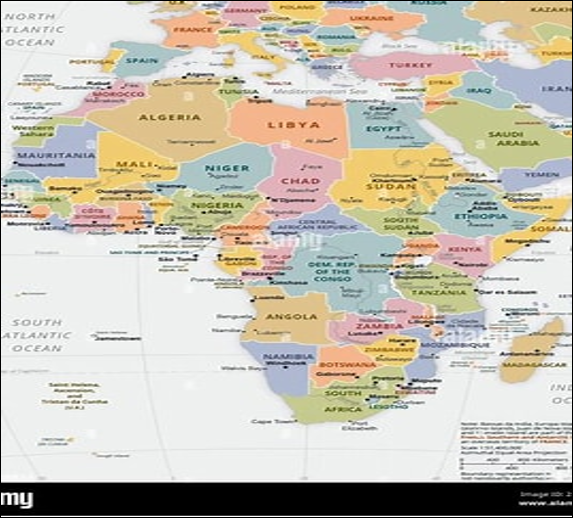
Map of Africa retrieved from World Atlas

Published

2026-07-08

How to Cite

Okeleke, J. C. (2026). Ethnicity as an Asset: Reassessing Its Role in Nation-Building in African Governments. FUDMA Journal of Humanities, Social Science and Creative Arts, 2(2), 22-33. https://doi.org/10.70882/fujohssaca.2026.v2(2).40

How to Cite

Okeleke, J. C. (2026). Ethnicity as an Asset: Reassessing Its Role in Nation-Building in African Governments. FUDMA Journal of Humanities, Social Science and Creative Arts, 2(2), 22-33. https://doi.org/10.70882/fujohssaca.2026.v2(2).40