Designing a Child-Conscious Recreation Center in Abuja: Enhancing Play, Learning, and Parental Engagement through Architecture

Authors

Keywords:

Child-conscious architecture, Informal learning, Children’s recreation center, Parental engagement, Nature-based play, Loose parts theory, Vygotsky, Piaget

Abstract

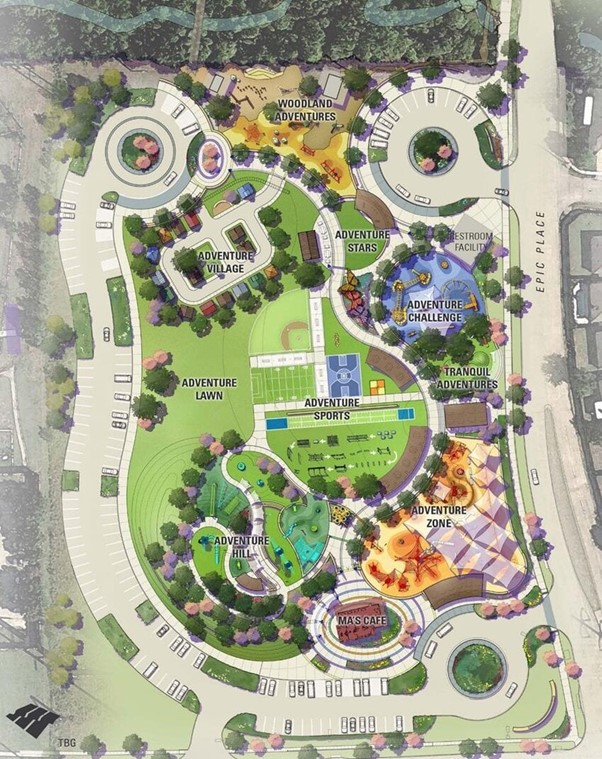
Play constitutes a major ingredient of learning for children, embedding the zest for new ideas and morals while enabling extensive use of imagination. Children escape into fantasy roles are becoming pioneers, heroes, doctors, nurses, royalty, or inspiring figures, thereby developing independence and a sense of societal status and importance. Despite government provisions for recreation facilities in urban centers like Abuja, Nigeria, many existing parks prioritize commercial amusement over conscious integration of informal learning components. This paper proposes an enhanced child-conscious recreation center in Abuja that blends recreation with informal learning opportunities while accommodating parents at a secondary level. Drawing on Piaget’s constructivist theory and Vygotsky’s sociocultural perspective, alongside contemporary playful learning frameworks, the study identifies essential design characteristics: safety and comfort with appropriate dimensioning, flexibility with loose parts, rich learning affordances, social inclusivity, natural and cultural integration, and parental engagement spaces. Case studies of local facilities (Maitama Amusement Park and Magicland Amusement Park) reveal gaps in learning integration, while international benchmarks like that of the Cultural Park for Children in Cairo and the Corviale Recreation Center in Rome, all offers valuable lessons. A hybrid master plan is proposed, incorporating themed zones, climate-responsive features suitable for Abuja’s tropical climate, inclusive access, and culturally relevant Nigerian elements. The research advocates for interdisciplinary collaboration and policy support to create stimulating environments that harness play’s full developmental potential. Findings underscore the built environment’s role as a “third teacher” in fostering creativity, self-regulation, and holistic child development in rapidly urbanizing African contexts.
Dimensions

Abdelhalim, I. I. (n.d.). Cultural Park for Children, Cairo. Archnet. https://www.archnet.org/sites/775

Craig, D., Trina, N. A., Monsur, M., Sabainah Akinbobola, M., Cosco, N., & Mastergeorge, A. (2024). Effective nature-based outdoor play and learning environments for below-3 children: A literature-based summary. International Journal of Environmental Research and Public Health, 21(9), Article 1247. https://doi.org/10.3390/ijerph21091247

Gutierrez, M. S. (2023). Environmental education in informal learning spaces: Integration, design, and access [Graduate student portfolio]. ScholarWorks@University of Montana. https://scholarworks.umt.edu/grad_portfolios/322/

Hirsh-Pasek, K., Masters, A. S., Christie, S., Gibbs, H. M., Evans, N. S., Fletcher, K. K., Pesch, A., Yang, H., Fan, W., Todaro, R. D., Golinkoff, R. M., & Xu, F. (2022). Where global science meets playful learning: Implications for home, school, and city planning [White paper]. The LEGO Foundation & Yidan Foundation.

Hotels.ng. (n.d.). Maitama Amusement Park. https://hotels.ng/places/parks/2572-maitama-amusement-park

Malik, F., & Marwaha, R. (2023). Cognitive development. In StatPearls. StatPearls Publishing. https://www.ncbi.nlm.nih.gov/books/NBK537095/

Malone, K. (2003). Children’s environmental learning and the use, design and management of school grounds. Children, Youth and Environments, 13(2), 87–137. https://www.jstor.org/stable/10.7721/chilyoutenvi.13.2.0087

Morgenthaler, T., Schulze, C., Martin, H., & Schulte, C. (2023). Environmental qualities that enhance outdoor play in community playgrounds from the perspective of children with and without disabilities: A scoping review. International Journal of Environmental Research and Public Health, 20(3), Article 1763. https://doi.org/10.3390/ijerph20031763

Nicholson, S. (1971). How NOT to cheat children: The theory of loose parts. Landscape Architecture, 62(1), 30–34.

Pereira, J. V., Vila-Nova, F., Veiga, G., Lopes, F., & Cordovil, R. (2024). Associations between outdoor play features and children’s behaviour and health: A systematic review. Health & Place, 87, Article 103235. https://doi.org/10.1016/j.healthplace.2024.103235

Piaget, J. (1964). Cognitive development in children: Development and learning. Journal of Research in Science Teaching, 2(2), 176–186. https://doi.org/10.1002/tea.3660020306

Shabani, K., Khatib, M., & Ebadi, S. (2010). Vygotsky’s Zone of Proximal Development: Instructional implications and teachers’ professional development. English Language Teaching, 3(4), 237–248. https://doi.org/10.5539/elt.v3n4p237

Shafik, Z. (2019). Reviving the “Cultural Park for Children” in Sayyeda Zeinab in the shadows of social sustainability. Journal of Contemporary Urban Affairs, 3(2), 1–12. https://doi.org/10.25034/ijcua.2018.4699

Stanton-Chapman, T. L. (2021). How do the children play? The influence of playground type on children’s play styles. Frontiers in Psychology, 12, Article 703940. https://doi.org/10.3389/fpsyg.2021.703940

Taylor, N., Pringle, A., & Roscoe, C. M. P. (2024). Characteristics of the outdoor environment affording physical activity, motor competence, and social interactions in children aged 3–7 years: A systematic review. Children, 11(12), Article 1491. https://doi.org/10.3390/children11121491

Vygotsky, L. S. (1978). Mind in society: The development of higher psychological processes. Harvard University Press.

World Architecture. (2008, October 24). Recreation Centre in Rome. https://worldarchitecture.org/architecture-projects/pmfh/recreation_centre_in_rome-project-pages.html

Zosh, J. M., Hopkins, E. J., Jensen, H., Liu, C., Neale, D., Hirsh-Pasek, K., Solis, S. L., & Whitebread, D. (2017). Learning through play: A review of the evidence [White paper]. The LEGO Foundation. https://cms.learningthroughplay.com/media/wmtlmbe0/learning-through-play_web.pdf

Comparative Conceptual Master Plans for the Proposed Abuja Children’s Recreation Center

Published

2025-12-31

How to Cite

Emmanuel, U. H., & Abdullahi, A. (2025). Designing a Child-Conscious Recreation Center in Abuja: Enhancing Play, Learning, and Parental Engagement through Architecture. FUDMA Journal of Humanities, Social Science and Creative Arts, 1(2), 71-82. https://doi.org/10.70882/fujohssaca.2025.v1(2).37

How to Cite

Emmanuel, U. H., & Abdullahi, A. (2025). Designing a Child-Conscious Recreation Center in Abuja: Enhancing Play, Learning, and Parental Engagement through Architecture. FUDMA Journal of Humanities, Social Science and Creative Arts, 1(2), 71-82. https://doi.org/10.70882/fujohssaca.2025.v1(2).37