Incumbent Political Party State Capture and Party Defections in Nigeria: Implications for Democracy and Good Governance
Keywords:
Political Party State Capture, State Capture, Defections, Democracy, Good GovernanceAbstract
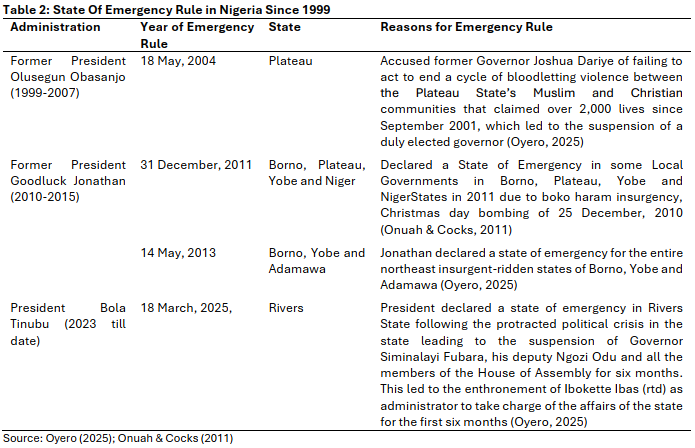
State capture, a widespread and irregular practice observed across Africa, Eastern Europe, Asia, and Latin America, has contributed to the establishment of one-party dominant states, the politicisation of governmental institutions, and recurrent defections within political parties. In Nigeria, the incumbent state capture is perpetuated through several strategies, such as installing loyalists within opposing parties, utilising anti-corruption bodies to intimidate political adversaries, exerting considerable influence over the judiciary and electoral bodies like the Independent National Electoral Commission (INEC), and invoking emergency provisions to impose emergency rule. This paper aimed to dissect the methods employed by the incumbent to exert control over the political landscape and to comprehend the consequences for governance and democratic processes. The research draws upon both rational choice theory and Marxism to provide a robust analytical framework. Employing a qualitative approach, a historical case study was conducted, relying on secondary qualitative data and thematic analysis for interpretation. This paper posited that incumbent political party state capture has eroded opposition strength, leading to frequent defections, mergers, and the formation of new parties designed to challenge and dislodge the central government. To counteract political party state capture in Nigeria, the paper recommends strengthening the judiciary and electoral authorities, diminishing the appeal of public office, and fostering political parties with distinct democratic and ideological platforms.
Published
How to Cite
Issue
Section
Copyright (c) 2026 Itebite Daniel Okoh, Henry Magnus Obasogie (Author)

This work is licensed under a Creative Commons Attribution-NonCommercial 4.0 International License.
- Attribution — You must give appropriate credit, provide a link to the license, and indicate if changes were made. You may do so in any reasonable manner, but not in any way that suggests the licensor endorses you or your use.
- Non-Commercial — You may not use the material for commercial purposes.
- No additional restrictions — You may not apply legal terms or technological measures that legally restrict others from doing anything the license permits.